
3 BHK
1,760 to 2,265 sq. ft. layouts designed for families who want a premium but still manageable cost band within Block B.
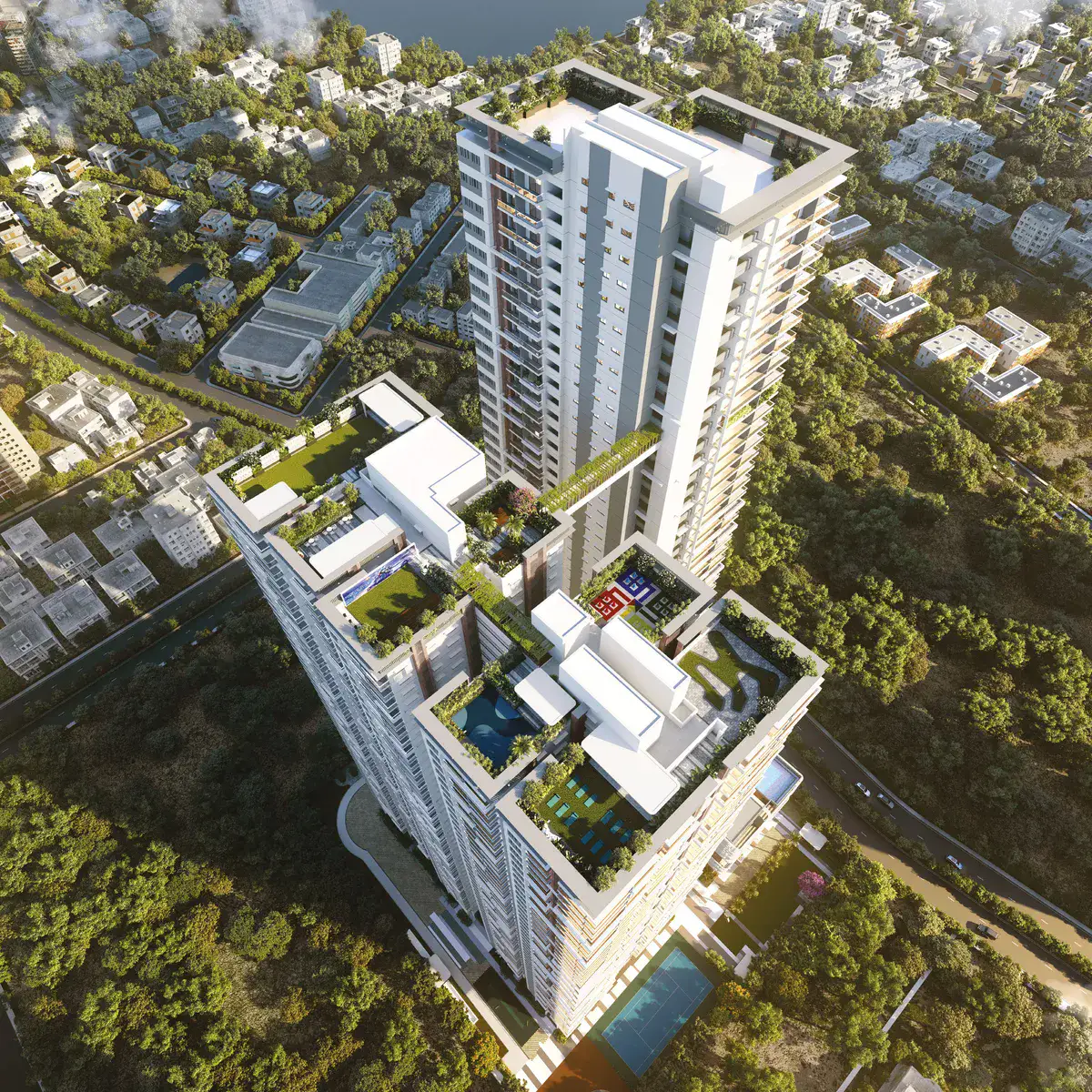
Hallmark Altus enters the market as an ultra-premium, tall-tower apartment community rather than a broad-market gated complex. The proposition depends on generous home sizes, visible skyline scale, and an amenity stack that feels ambitious enough to justify the premium pitch. For a broader Hyderabad shortlist, Namishree Vrindavan is useful because the overview question is really about fit, timing, and confidence rather than brochure language alone.
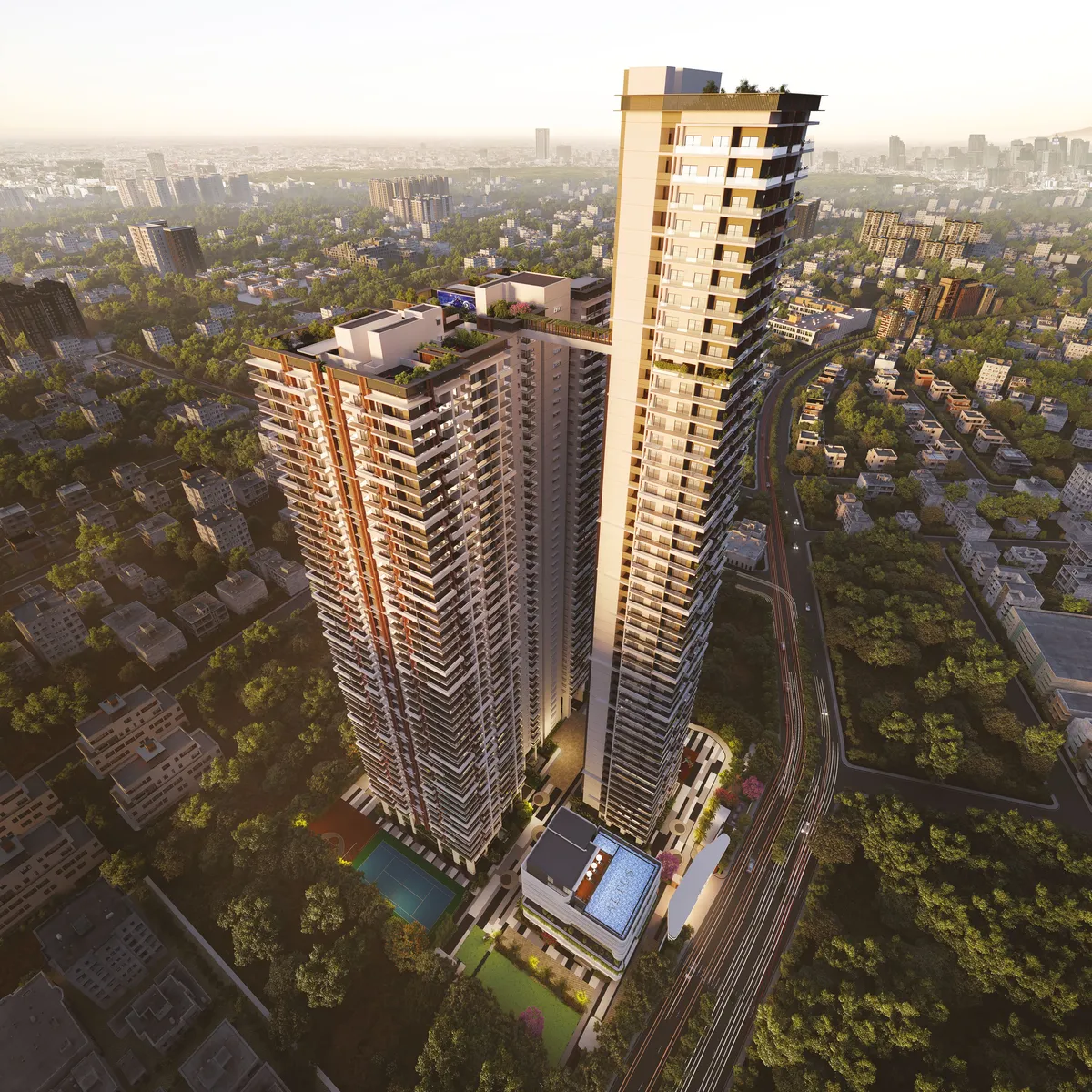
The project spreads across 3.5 acres and carries 490 homes over two towers. Those numbers matter because they frame the balance Altus is trying to maintain: dense enough to support a serious amenity program, but not so fragmented that the project loses its high-rise identity. Instead, Hallmark positions it as a destination tower address inside a mature demand corridor.
The project's strongest differentiators are not hidden in footnotes. They are visible in the core specification and planning story: a 10-floor clubhouse of roughly 50,800 sq. ft., four leisure zones that stretch beyond the podium, slab heights of 11 feet in Block B and 12 feet in Block A, and a location close enough to the HITEC-Gachibowli employment belt to remain relevant for both end-users and investors.
That split is important because it changes the way buyers should compare homes within the project. Block A is not a slightly better version of Block B. It is a much more exclusive tower format with only 4 BHK plus home theatre configurations and a sharper luxury expression. The 50-floor height, 12-foot slab heights, taller internal doors, and Italian marble use in the main living zones reinforce that difference. Rajapushpa Infina keeps the wider Hyderabad search practical by tying the project story back to buyer fit, configuration needs, and the confidence required before a site visit.
Block B is where most families will actually enter the project. It provides the 3 BHK, 3 BHK plus study, and 4 BHK ladder from 1,760 sq. ft. to 3,270 sq. ft. That means Block B has to work harder on functionality, size efficiency, and flexibility. For many end-users, it may also offer the strongest balance between price and usable family space.
This is why the project reads well for two separate audiences: aspirational buyers who want a high-rise luxury badge, and practical premium buyers who want large homes without jumping immediately to the highest luxury ticket.
There is no token small-format inventory here. Even the entry band starts at 1,760 sq. ft., which is larger than what many premium launches position as their mainline 3 BHK offer. That helps Hallmark Altus stand apart, but it also means buyers should evaluate the project only if they genuinely need larger homes or want a premium address profile.
1,760 to 2,265 sq. ft. layouts designed for families who want a premium but still manageable cost band within Block B.
2,540 to 2,975 sq. ft. homes that better suit buyers who need a dedicated office or a more layered family routine.
The 3,270 sq. ft. Block B configuration gives a large-home proposition without stepping up to the full Block A price jump.
4,575 to 4,685 sq. ft. layouts in Block A built for high-ticket buyers who care more about exclusivity than efficiency.
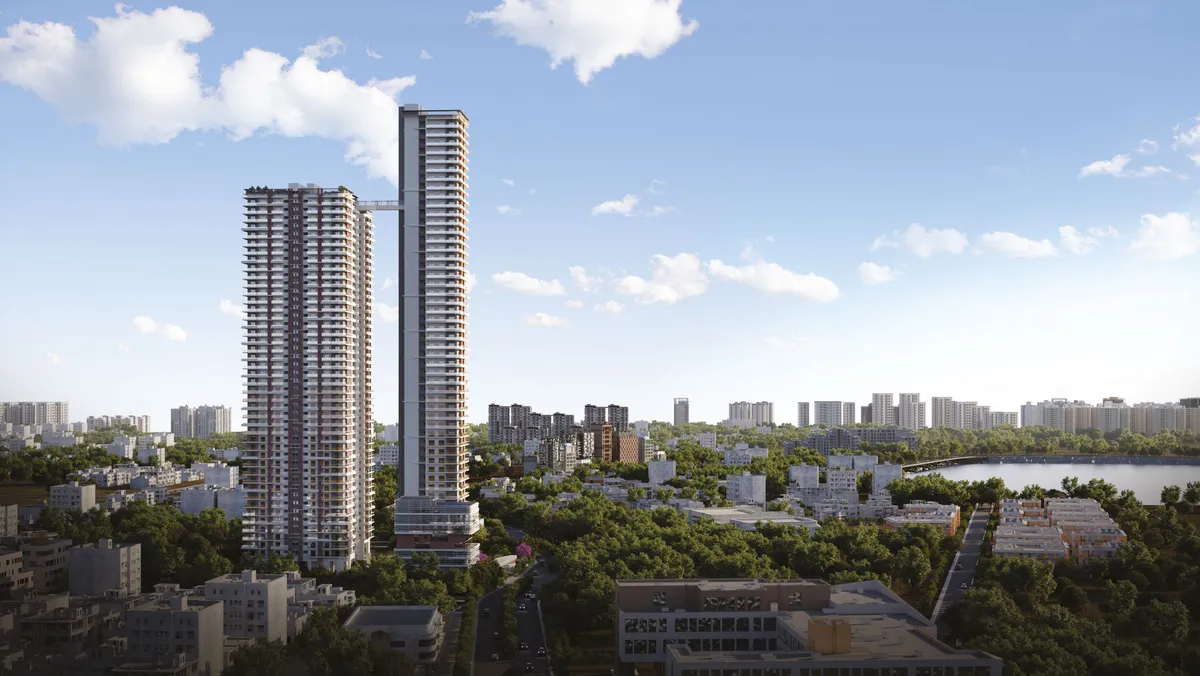
Hallmark Builders has built its identity around Hyderabad's premium residential market, and Altus is one of the clearest examples of that ambition. The project is executed through Hallmark Infra Heights LLP, and the core narrative is designed to signal confidence: tall towers, high slab heights, RCC shear wall construction, a large amenities envelope, and large-format homes that appeal to a more affluent household base.
For buyers, that means doing two things at once. First, appreciate the specificity of the product. Second, keep an eye on execution quality and construction pace, because projects of this scale ask more from developers in terms of delivery discipline. The local research notes mention structural progress at around 8 percent as of May 2025, so milestone tracking remains a sensible part of due diligence.
If you are comparing Hallmark Altus against larger national brands, the practical question is not whether Hallmark is as large as the biggest pan-India developers. The more useful question is whether this particular product, location, and pricing band justify a closer look when matched against current alternatives.
Hallmark Altus is not trying to win on a minimal luxury script. It uses core specification points to justify why buyers should pay more for the taller and larger formats. The use of RCC shear wall construction is particularly important for a high-rise project because it signals attention to wind and seismic resistance, which matters more as floor count rises.
End-users with established family routines are a strong fit because the project combines school access, large homes, recreation depth, and west-Hyderabad office reach. NRIs may also find it compelling because the project is easier to explain to relatives and visiting decision-makers than a more remote location would be. Investors can make a case too, especially because the pricing sits around prevailing Kondapur premium rates rather than significantly above them, but investment logic still depends on timely execution.
If your priority is a walkable metro, Hallmark Altus is not a perfect match. If you need a compact starter apartment, it is also not a fit. But if your brief reads more like "a premium, high-rise, western-corridor family home with amenity depth and a sense of arrival," the project has a far clearer identity.
Pair these with the location guide and master plan when you want independent context beyond the sales pack.
The next useful pages are pricing if you need to understand the all-in cost shape, floor plans if room sizes are driving your shortlist, and reviews if you want an honest take on trade-offs before scheduling a visit. Compare the corridor story, configuration mix, launch stage, developer signal, and practical compromises for end use.
Hallmark Altus is built on a 3.5-acre parcel and holds 490 homes across two towers. Block A rises to 50 floors and Block B to 44 floors, giving the project a deliberately tall-tower profile on a relatively compact footprint.
The mix covers 3 BHK from 1,760 to 2,265 sq. ft., 3 BHK plus study from 2,540 to 2,975 sq. ft., 4 BHK at 3,270 sq. ft. in Block B, and 4 BHK plus home theatre at 4,575 to 4,685 sq. ft. in Block A. There is no small-format inventory in the project.
Block A is the prestige tower: 50 floors, 12-foot slab heights, only 4 BHK plus home theatre homes, and Italian marble in the main living zones. Block B rises to 44 floors with 11-foot slab heights and carries the wider 3 BHK to 4 BHK mix with premium vitrified flooring.
The project launched in June 2024 and is under construction. Local research notes referenced structural progress at around 8 percent as of May 2025, so milestone-level tracking through quarterly RERA updates is a sensible part of due diligence.
Hallmark Altus fits buyers looking for a premium high-rise address, larger 3 or 4 BHK homes, and amenity depth inside Hyderabad's western corridor. It is not a match for compact-format starter buyers or anyone who needs walkable metro access.
The technical stack includes RCC shear wall construction for tall-tower resilience, high-speed lifts, 100 percent DG backup, RFID vehicle management, EV charging support, piped gas, rainwater harvesting, STP reuse, and solar fencing. Window framing is aluminium with toughened glass and mosquito mesh provision.