
Zone 1: Podium
Around 50,000 sq. ft. of active recreation, kids' zones, entry experience, and community lawns.
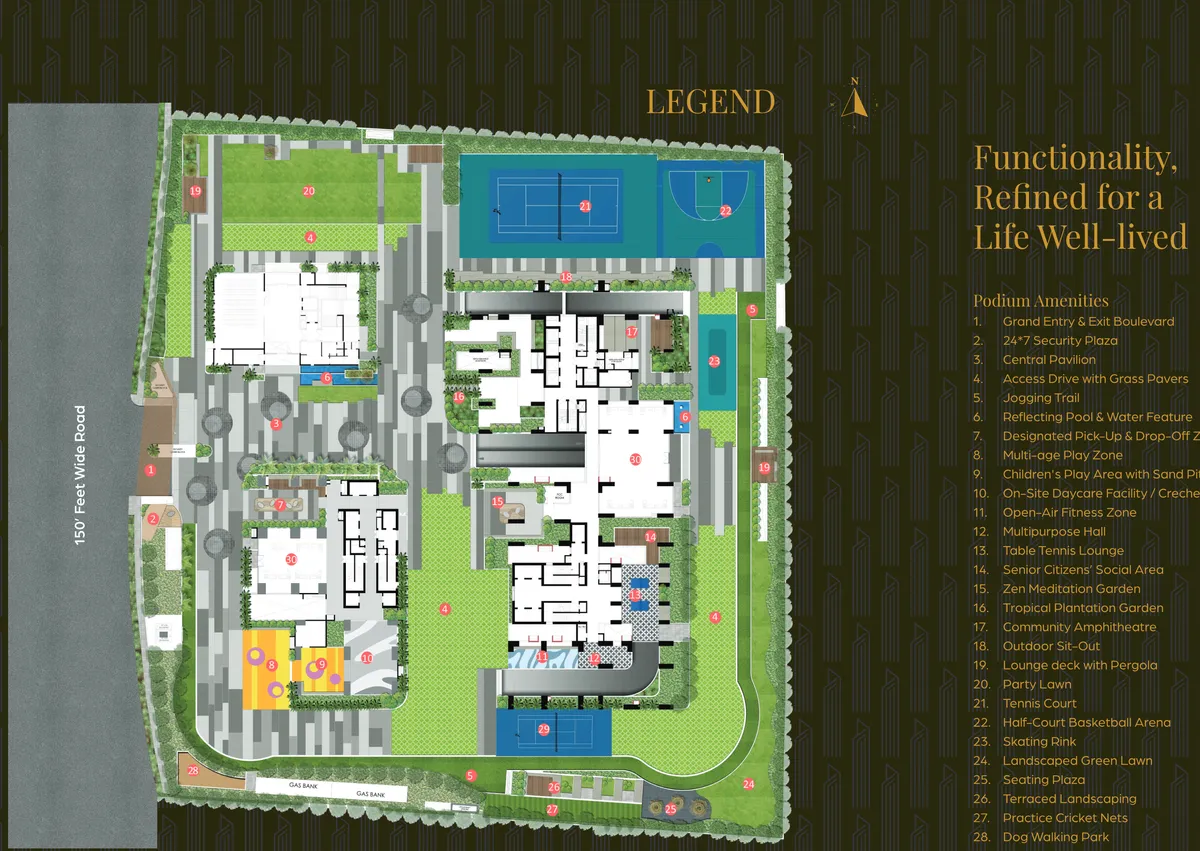
On paper, 3.5 acres can sound modest for a project with two tall towers and a large amenity brief. The master plan is what makes the story believable. Instead of relying on one broad ground-level lawn and a clubhouse, Hallmark Altus stacks activity, wellness, and social spaces across multiple layers. For another Hyderabad planning reference, Namishree Vrindavan helps keep attention on density, circulation, landscape depth, and the way residents will move through the community.
The Hallmark Altus plan uses the podium level as the main active foundation of the community. That includes the arrival sequence, courts, jogging loops, party lawns, children's play areas, and a broader outdoor social program. This is a smart move because it preserves the feeling of a residential base even though the project is primarily vertical.
It also allows the towers to rise above a more animated common platform rather than feeling isolated from each other. When a high-rise project gets this layer wrong, it can feel hard and overly built-up at the base. Altus appears to be trying to avoid that through amenity density and distributed open-use zones.
The value of this planning strategy is not just the number of amenities. It is the separation of use types. Families get outdoor activity and play spaces on the podium. Residents who want indoor recreation and service-heavy leisure get the clubhouse. Buyers who care about elevated leisure get the sky decks. Those who prefer quieter corners get the environment deck.
Around 50,000 sq. ft. of active recreation, kids' zones, entry experience, and community lawns.
Around 50,800 sq. ft. across 10 floors for indoor sports, spa, pool, co-working, theatre, and social infrastructure.
About 20,000 sq. ft. of rooftop theatre, yoga, sky bar, mini golf, barbecue, and elevated leisure.
About 10,000 sq. ft. of biophilic gardens, reading corners, chess, and quieter daily-use spaces.
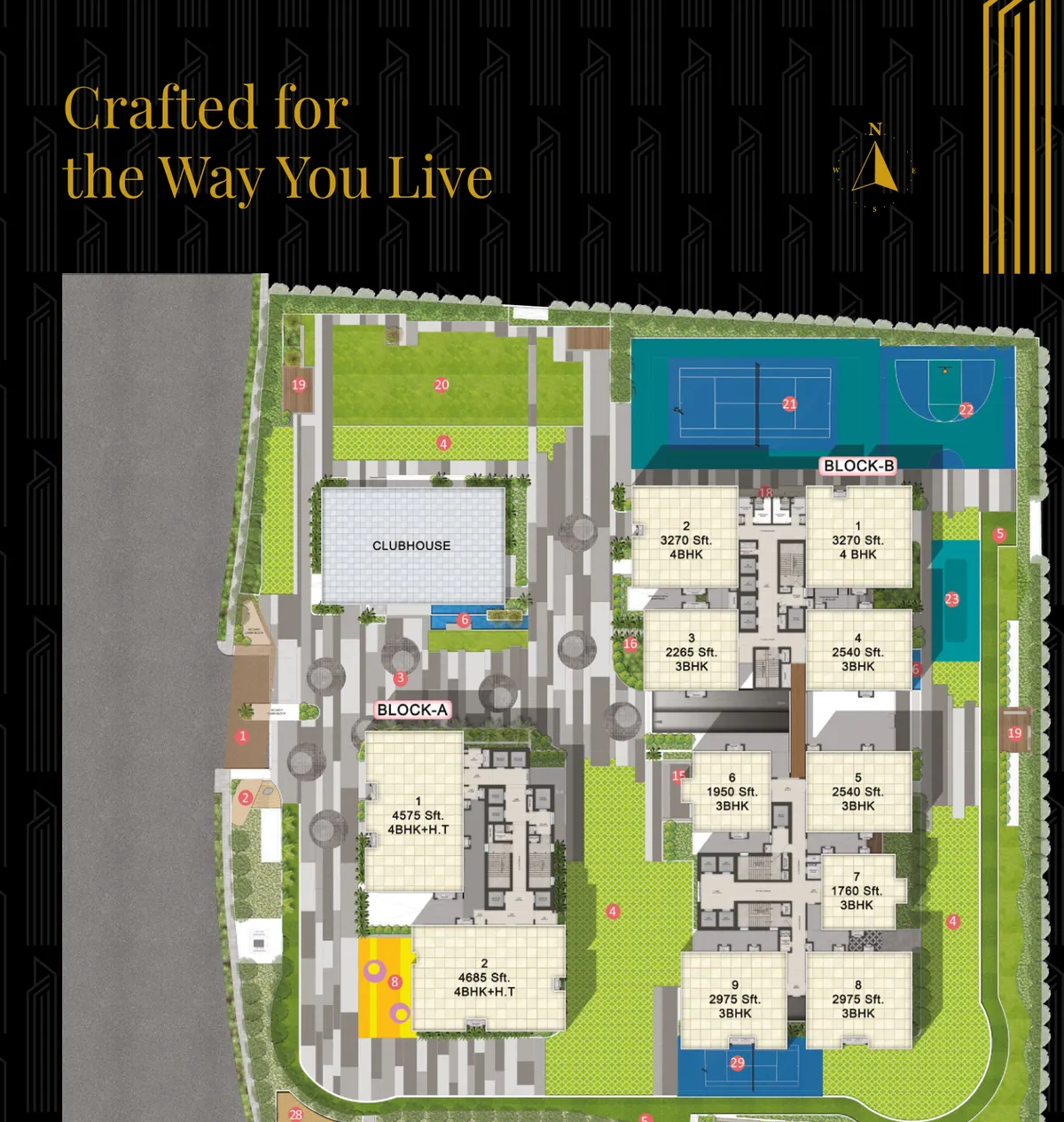
Based on the available drawings, the towers are planned in a way that keeps the shared surfaces central to the resident experience. That matters because tall towers can otherwise become disconnected islands. Here, the planning intent seems to be the opposite: create a common lifestyle foundation first, then rise into premium tower living.
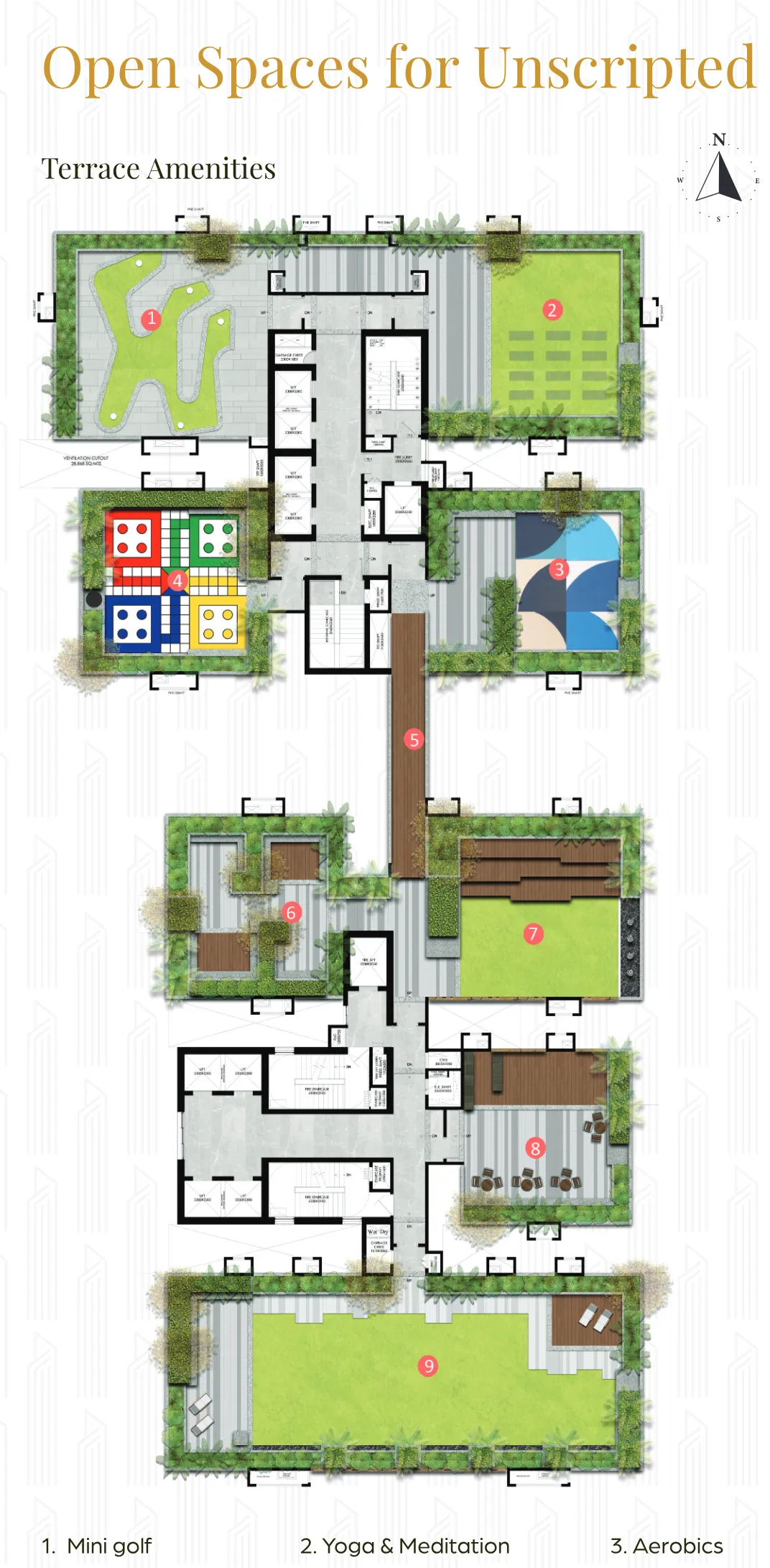
The terrace-level visuals also reinforce a second design decision. Hallmark Altus is not treating the upper levels only as technical roof zones. Instead, the project uses height as an amenity asset, which is exactly what buyers expect from a premium skyscraper narrative.
Distributed play and sports zones mean daily routines can spread out instead of crowding one part of the property.
Rooftop leisure, party lawns, theatre spaces, and guest rooms suggest the site is planned for social use as much as private living.
When height is paired with elevated amenities and not just higher apartment floors, the premium story becomes more coherent.
Use the amenities page to see how each zone translates into daily use, then compare that against the layout choices on floor plans.
Continue to amenities for a zone-by-zone view of the project, or jump to gallery if you want to see how the visual identity supports the site planning. Compare density, circulation, landscape placement, tower or plot separation, and the relationship between private homes and shared zones.
The master plan splits the 3.5-acre site into four amenity zones - a podium activity zone of about 50,000 sq. ft., a 10-floor clubhouse of about 50,800 sq. ft., a sky terrace program of about 20,000 sq. ft., and an environment deck of about 10,000 sq. ft. The two-tower massing of Block A and Block B sits on top of this layered plan.
The podium delivers the active outdoor program for the project, holding tennis, basketball, cricket nets, pickle ball, skating, open-air fitness, children's play areas, and gathering lawns. On a compact site, the podium also frees up ground space for arrival and circulation.
The clubhouse stacks roughly 50,800 sq. ft. of indoor leisure across 10 floors, which is unusual for a Hyderabad apartment project. It concentrates badminton, squash, spa, gym, pool, preview theatre, music room, cafe, conference rooms, and guest suites into one premium destination block.
The sky terrace program of about 20,000 sq. ft. distributes rooftop theatre, sky bar, barbecue deck, yoga zone, and mini golf at elevation. It uses height as a leisure asset, not only as a residential one.
Block A and Block B are intentionally differentiated rather than treated as twin towers. The site plan supports both arrival impact through the 150-foot approach road and everyday circulation, with the podium and clubhouse taking the bulk of the active and indoor recreation.
The environment deck of about 10,000 sq. ft. is the quieter side of the master plan. It carries biophilic garden, zen corners, reading spaces, chess areas, and co-working nooks for residents who want calm daily-use spaces rather than only event-driven amenities.